We live in a world where almost everything is connected to the internet. From online banking and shopping to education, healthcare, communication, and business, digital technology has made everyday life faster and more convenient.
But with this convenience comes responsibility.
Every day, people share personal information online, businesses store valuable customer data, and organizations depend on digital systems to operate. This information can be targeted by cybercriminals who use different techniques to steal data, access accounts, disrupt services, or commit fraud.
This is why cybersecurity has become an essential part of modern life.
Cybersecurity is not only about protecting computers from hackers. It is about protecting information, identities, devices, businesses, and digital relationships. By developing strong security habits and understanding common cyber risks, individuals and organizations can build a safer digital future.
What Is Cybersecurity?
Cybersecurity is the practice of protecting digital systems, networks, devices, applications, accounts, and information from unauthorized access, attacks, damage, or disruption.
It combines technology, security processes, policies, and human awareness.
Cybersecurity professionals work to identify vulnerabilities, prevent attacks, detect suspicious activity, respond to security incidents, and help organizations recover when problems occur.
The main goals of cybersecurity are often described through three important principles:
- Confidentiality: Keeping information accessible only to authorized people.
- Integrity: Making sure information remains accurate and is not improperly changed.
- Availability: Ensuring authorized users can access systems and information when needed.
Together, these principles form an important foundation for digital security.
Why Protecting Data Matters
Data has become one of the most valuable assets in the digital economy.
Businesses may store customer names, contact details, payment information, employee records, financial documents, and intellectual property. Individuals may store photographs, personal messages, account information, and other private data on their devices and online accounts.
If this information falls into the wrong hands, the consequences can be serious.
A data breach may result in financial losses, identity theft, privacy problems, operational disruption, or damage to an organization’s reputation.
Protecting data therefore means protecting much more than files. It means protecting people’s privacy, businesses’ operations, and trust in digital services.
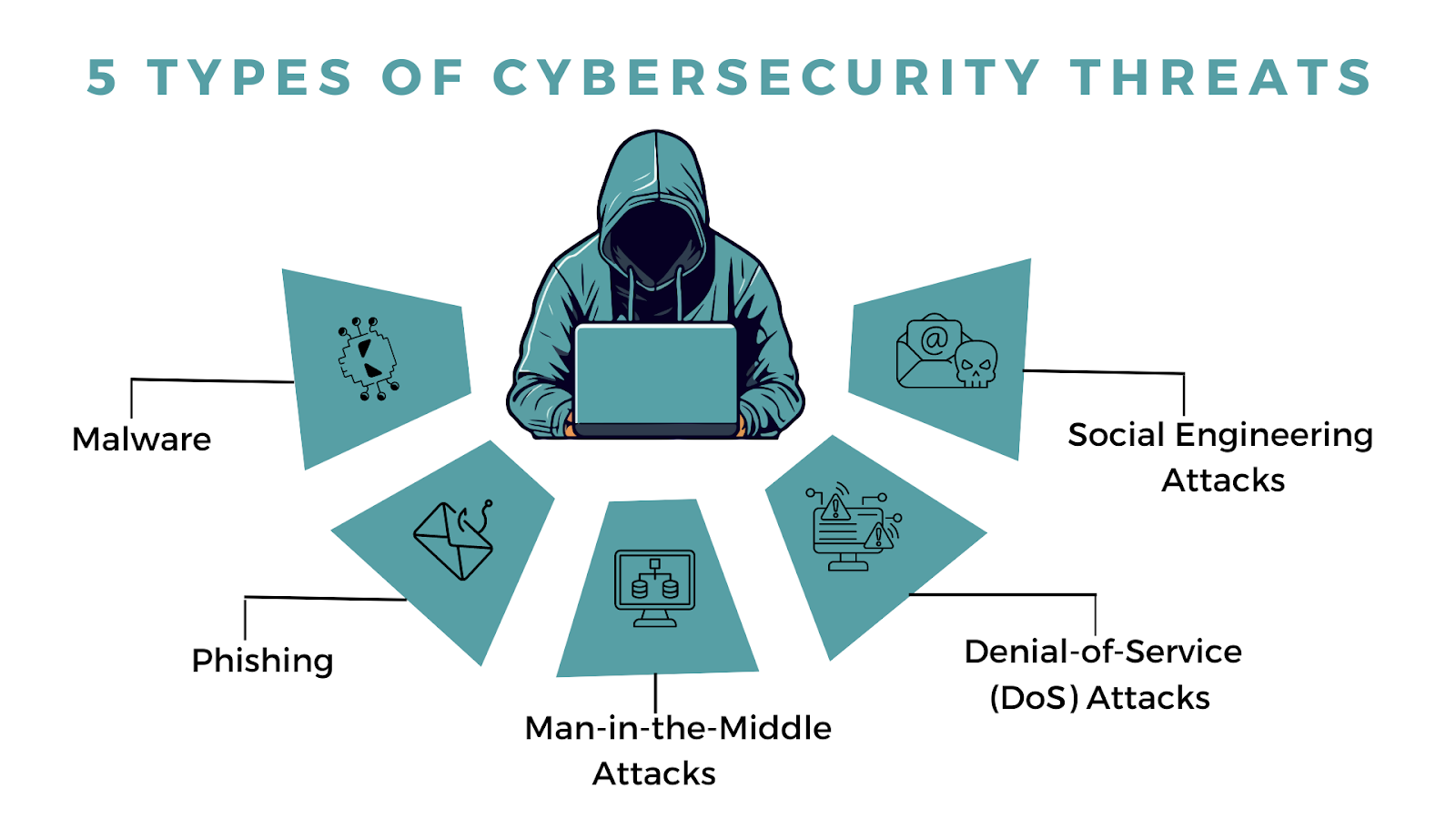
Common Cybersecurity Threats
Understanding common cyber threats can help people recognize potential dangers before they become serious problems.
Phishing
Phishing is one of the most common forms of cyberattack.
Attackers send messages designed to look legitimate and attempt to persuade recipients to click a link, open an attachment, provide information, or take another action.
A phishing message may pretend to come from a bank, employer, delivery service, social media platform, or another familiar organization.
Common warning signs include unexpected requests, unusual links, poor-quality messages, and pressure to act immediately.
When in doubt, access the service through its official website or application instead of clicking a link in a suspicious message.
Malware
Malware refers to malicious software designed to perform unauthorized or harmful activities.
Different forms of malware can steal information, monitor activity, damage files, or provide attackers with unauthorized access.
Malware can spread through unsafe downloads, malicious attachments, compromised websites, or other methods.
Keeping software updated and using trusted sources for applications can help reduce some risks.
Ransomware
Ransomware is a type of malware that can prevent users or organizations from accessing files or systems.
Attackers may demand payment in exchange for restoring access.
A strong backup strategy can help organizations recover important data after an attack. Security updates, employee awareness, access controls, and monitoring are also important parts of ransomware preparedness.
Password Attacks
Weak and reused passwords can make accounts easier to compromise.
Using long, unique passwords and enabling multi-factor authentication can provide stronger protection.
A password manager can also help users create and manage unique credentials without needing to memorize every password.
Social Engineering
Cybercriminals do not always attack technology directly. Sometimes they target people.
Social engineering involves manipulating someone into revealing information or performing an action that benefits the attacker.
For example, an attacker might pretend to be a manager and request confidential information.
Being cautious about unusual requests and verifying identities independently can reduce this risk.
How to Protect Your Personal Data
Protecting personal information starts with everyday habits.
Use Strong and Unique Passwords
Avoid using the same password across multiple accounts.
If one service experiences a breach, reused credentials could put other accounts at risk.
Create unique passwords for important accounts and consider using a trusted password manager.
Enable Multi-Factor Authentication
Multi-factor authentication adds another layer of security.
Instead of relying only on a password, the account may require an additional verification method.
This can make unauthorized access more difficult, even if a password is exposed.
Keep Software Updated
Software updates frequently include security fixes.
Delaying updates can leave devices exposed to known vulnerabilities.
Keep operating systems, browsers, applications, and mobile devices updated whenever appropriate.
Be Careful With Links and Attachments
Do not automatically trust every email, message, or attachment.
If something seems unusual, verify it before clicking or downloading.
Pay particular attention to requests involving passwords, payments, confidential information, or urgent action.
Protecting Your Smartphone
Smartphones contain a significant amount of personal information.
They may provide access to email, banking applications, social media, photographs, messages, and other sensitive services.
Use a strong screen lock and keep the device updated.
Only install applications from trusted sources, and review the permissions requested by applications.
If your smartphone supports biometric authentication, it can provide an additional security option.
A secure backup can also help protect important information if a device is lost or damaged.
Cybersecurity for Businesses
Businesses face cybersecurity risks regardless of their size.
A small business may assume that attackers are only interested in large organizations, but smaller companies can also be targeted because they may have valuable information and limited security resources.
Businesses should consider implementing:
- Strong authentication
- Employee security training
- Regular backups
- Access controls
- Software updates
- Network security
- Security monitoring
- Incident response plans
- Data protection policies
Employees should receive only the access they need to perform their responsibilities.
This principle can help limit the potential damage caused by a compromised account.
The Human Side of Cybersecurity
Technology is only one part of cybersecurity.
Human behavior plays an equally important role.
An employee may accidentally click a malicious link, reuse a password, or share confidential information with the wrong person.
This is why cybersecurity awareness is essential.
Organizations can provide regular training that teaches employees how to identify phishing messages, protect passwords, handle sensitive information, and report suspicious activity.
A workplace where people feel comfortable reporting mistakes quickly can respond more effectively to security incidents.
Cybersecurity and Cloud Computing
Cloud services have changed the way businesses and individuals store information.
Instead of keeping everything on local computers, users can store files and run applications through cloud platforms.
Cloud computing provides flexibility and convenience, but security responsibilities still exist.
Users and organizations need to manage permissions, authentication, configuration, data protection, and account security carefully.
Moving information to the cloud does not automatically make it secure.
Good security practices remain necessary regardless of where data is stored.
Artificial Intelligence and Cybersecurity
Artificial intelligence is becoming an increasingly important part of cybersecurity.
AI-powered systems can analyze large amounts of information and identify patterns that may indicate suspicious activity.
They can potentially help security teams detect threats, prioritize alerts, and respond more efficiently.
However, attackers can also use advanced technologies to improve their techniques.
This means cybersecurity will continue to evolve as both attackers and defenders adopt new tools.
Human oversight remains essential when using AI for security decisions.
Data Backups and Cyber Resilience
No security system can guarantee that an attack will never happen.
This is why organizations and individuals should consider how they will recover if something goes wrong.
Regular backups can help protect important information against accidental deletion, hardware failure, ransomware, and other incidents.
Businesses should test backups periodically to ensure that important information can actually be restored.
This ability to prepare for, respond to, and recover from incidents is part of cyber resilience.
Cybersecurity for Remote Workers
Remote work has introduced new security considerations.
Employees may access company systems from homes, hotels, public spaces, and personal devices.
Organizations should establish clear policies for remote access and provide employees with appropriate security tools and training.
Workers should keep their devices updated, protect their accounts, avoid sharing work credentials, and use secure connections when accessing sensitive systems.
The Cost of Poor Cybersecurity
Weak cybersecurity can have consequences that extend beyond immediate financial losses.
For businesses, a major security incident can interrupt operations and reduce customer confidence.
Customers expect organizations to protect their information responsibly.
A company that repeatedly experiences security problems may struggle to maintain its reputation.
Investing in cybersecurity is therefore not simply an IT expense. It can be an important part of protecting business continuity and customer trust.
Building a Strong Cybersecurity Strategy
A strong cybersecurity strategy does not depend on a single tool.
It requires multiple layers of protection.
Organizations should identify their most valuable information and systems, understand potential risks, establish security policies, train employees, monitor activity, maintain backups, and prepare for incidents.
Regular security reviews can help identify weaknesses before attackers discover them.
The goal should be continuous improvement rather than assuming that security is ever completely finished.
The Future of Cybersecurity
The future of cybersecurity will be shaped by rapid technological change.
Artificial intelligence, cloud computing, connected devices, remote work, digital payments, and other technologies will continue to expand the digital environment.
Security systems will likely become more automated and sophisticated.
At the same time, cybercriminals will continue developing new methods.
This means cybersecurity professionals will need to learn continuously and adapt to changing threats.
Individuals will also need to develop better digital awareness.
How Everyone Can Help Build a Safer Digital Future
Cybersecurity is a shared responsibility.
Individuals can protect their accounts and personal information.
Businesses can secure systems and educate employees.
Technology companies can build stronger security into their products.
Educational institutions can teach digital safety.
Governments and organizations can support cybersecurity standards and awareness.
When these efforts work together, the digital environment becomes more resilient.

Conclusion
Cybersecurity is essential for protecting the information, systems, and identities that have become part of modern life.
From phishing and malware to ransomware, social engineering, and data breaches, cyber threats can affect individuals and organizations in many different ways.
Fortunately, strong security does not always require complicated technology.
Using unique passwords, enabling multi-factor authentication, keeping software updated, maintaining backups, being cautious with suspicious messages, and protecting personal information can make a meaningful difference.
For businesses, cybersecurity should be treated as an ongoing priority that includes technology, policies, employee training, and incident preparation.
The digital future offers enormous opportunities, but those opportunities depend on trust.
By taking cybersecurity seriously today, we can protect our data, strengthen digital trust, and build a safer future for everyone.
Frequently Asked Questions
What is cybersecurity?
Cybersecurity is the practice of protecting digital devices, systems, networks, applications, accounts, and information from unauthorized access, attacks, damage, or disruption.
Why is cybersecurity important?
Cybersecurity helps protect personal information, financial data, business systems, customer records, and digital services from cyber threats.
How can I protect my personal data?
Use strong and unique passwords, enable multi-factor authentication, keep software updated, avoid suspicious links, limit unnecessary information sharing, and maintain secure backups.
What is the biggest cybersecurity threat?
There is no single threat that is always the biggest. Phishing, malware, ransomware, social engineering, credential attacks, and data breaches can all create serious risks depending on the situation.
Can artificial intelligence improve cybersecurity?
Yes. AI can help analyze large amounts of security information, identify unusual patterns, and support threat detection. However, human oversight and other security controls remain important.
Is cybersecurity important for small businesses?
Yes. Small businesses can hold valuable customer and business information and may be targeted by cybercriminals. Strong authentication, backups, employee training, updates, and access controls can help reduce risk.