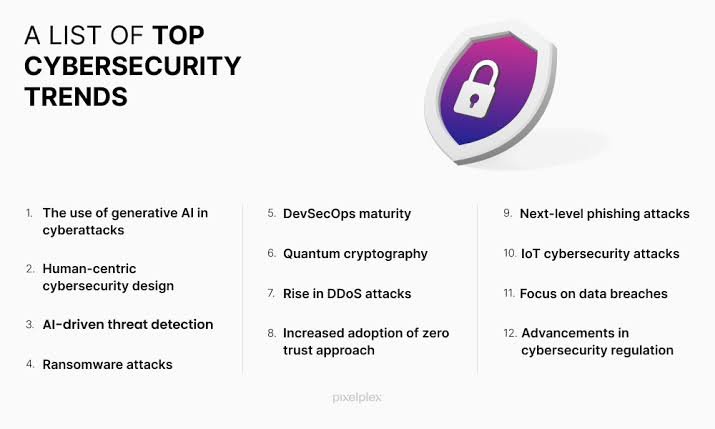
The cybersecurity landscape is changing faster than ever. As businesses and individuals become more dependent on digital technologies, cybercriminals are developing new methods to exploit weaknesses in systems, networks, and human behavior. At the same time, security professionals are adopting advanced tools and strategies to stay ahead of emerging threats.
From artificial intelligence-powered attacks to stronger identity protection methods, cybersecurity trends are shaping how we protect personal information, businesses, and critical infrastructure. Understanding these trends can help individuals and organizations prepare for the challenges ahead.
In this article, we’ll explore the biggest cybersecurity trends you should watch this year and explain how they may impact the way we stay safe online.
1. Artificial Intelligence Is Changing Cybersecurity
Artificial intelligence (AI) has become one of the biggest developments in technology, and cybersecurity is no exception. While AI provides powerful tools for detecting threats and improving security, cybercriminals are also using it to create more advanced attacks.
Hackers can use AI to:
- Create more convincing phishing emails
- Automate cyberattacks
- Generate fake messages and websites
- Develop new malware techniques
- Analyze stolen information quickly
On the defensive side, security teams are using AI to:
- Detect unusual activity
- Identify malware faster
- Predict potential threats
- Automate security responses
As AI continues to evolve, both attackers and defenders will rely on it more heavily.
2. Rise of AI-Powered Cyberattacks
While AI helps security teams, it also gives cybercriminals new capabilities. Traditional scams often contain obvious mistakes, but AI-generated attacks can appear much more realistic.
Examples include:
- Highly personalized phishing emails
- Fake voice recordings
- AI-generated videos
- Automated social engineering campaigns
These attacks can be difficult to identify because they are designed to imitate real people and trusted organizations.
To stay protected:
- Verify unexpected requests.
- Avoid trusting messages based only on appearance.
- Train employees to recognize advanced scams.
- Use multi-factor authentication.
3. Increased Focus on Identity Security
Passwords alone are no longer enough to protect digital accounts. With frequent data breaches and password theft incidents, organizations are moving toward stronger identity-based security solutions.
Identity security focuses on:
- Who is accessing information
- Whether access is legitimate
- What permissions users have
- How accounts are monitored
More organizations are adopting approaches such as:
- Multi-factor authentication (MFA)
- Passwordless login methods
- Biometric verification
- Identity monitoring systems
Protecting digital identities has become one of the most important areas of cybersecurity.
4. Zero Trust Security Becomes More Important
Traditional security models often trusted users inside a company’s network. However, modern threats have shown that trust cannot be assumed.
The Zero Trust security model follows the principle:
“Never trust, always verify.”
This means every user, device, and connection must be verified before accessing resources.
Zero Trust security includes:
- Continuous authentication
- Limited user access
- Device verification
- Network monitoring
- Strong access controls
This approach is becoming increasingly popular among businesses of all sizes.
5. Ransomware Attacks Continue to Evolve
Ransomware remains one of the biggest cybersecurity threats worldwide. In these attacks, criminals encrypt files or systems and demand payment to restore access.
Modern ransomware attacks are becoming more advanced by:
- Targeting organizations with valuable data
- Stealing information before encryption
- Demanding payment to prevent data leaks
- Using double-extortion techniques
Businesses can reduce ransomware risks by:
- Maintaining regular backups
- Updating security systems
- Training employees
- Limiting access permissions
- Creating incident response plans
6. Growing Importance of Cloud Security
As more businesses move their operations to cloud platforms, protecting cloud environments has become a major cybersecurity priority.
Cloud security challenges include:
- Misconfigured settings
- Weak access controls
- Unauthorized accounts
- Data exposure
- Insecure applications
Organizations are focusing on:
- Cloud monitoring tools
- Strong authentication
- Data encryption
- Regular security assessments
The cloud offers many benefits, but it requires careful management to stay secure.
7. Cybersecurity for Internet of Things (IoT) Devices
Smart devices are becoming common in homes and businesses. These include:
- Smart cameras
- Smart speakers
- Wearable devices
- Industrial sensors
- Connected appliances
However, many IoT devices have limited security features, making them attractive targets for hackers.
Common IoT risks include:
- Weak default passwords
- Outdated software
- Unauthorized access
- Data privacy concerns
To improve IoT security:
- Change default passwords.
- Update device firmware.
- Disable unnecessary features.
- Connect devices to secure networks.
8. More Attention on Mobile Security
With smartphones becoming central to daily activities, mobile security threats are increasing.
Cybercriminals are targeting mobile users through:
- Fake apps
- Phishing messages
- Spyware
- Malicious downloads
- Account takeover attacks
Mobile users should:
- Install apps only from trusted sources.
- Keep devices updated.
- Use screen locks.
- Enable MFA.
- Avoid suspicious links.
Protecting mobile devices is now an essential part of cybersecurity.
9. Cybersecurity Awareness Training Becomes Essential
Technology alone cannot stop every cyberattack. Human mistakes remain one of the biggest causes of security incidents.
Organizations are investing more in cybersecurity education to help employees recognize:
- Phishing attempts
- Social engineering tactics
- Unsafe downloads
- Password risks
- Data handling mistakes
A well-trained workforce acts as an important layer of defense.
10. Greater Use of Automation in Security
Cybersecurity teams often deal with thousands of alerts every day. Automation helps security professionals respond faster and more efficiently.
Security automation can help with:
- Detecting threats
- Blocking suspicious activity
- Investigating incidents
- Managing alerts
- Responding to attacks
As cyber threats become more complex, automation will play a larger role in protecting systems.
11. Stronger Data Privacy Regulations
Governments and organizations are paying more attention to protecting personal information.
Companies are increasingly required to:
- Collect less unnecessary data
- Protect customer information
- Report security incidents
- Improve transparency
Data privacy is becoming a major part of cybersecurity strategies, especially as more personal information moves online.
12. Supply Chain Security Becomes a Priority
Many businesses rely on third-party vendors, software providers, and external services. Cybercriminals often target these connections to reach larger organizations.
Supply chain attacks can affect:
- Software updates
- Cloud services
- Business partners
- Service providers
Companies are improving supply chain security by:
- Evaluating vendors carefully
- Monitoring third-party access
- Reviewing security practices
- Limiting unnecessary permissions
How Individuals Can Prepare for New Cyber Threats
Cybersecurity trends affect everyone, not just large organizations. Individuals can improve their security by:
- Using strong and unique passwords
- Enabling multi-factor authentication
- Keeping devices updated
- Avoiding suspicious links
- Backing up important files
- Monitoring accounts regularly
- Learning about new scams
Small security improvements can make a big difference.
How Businesses Can Prepare
Organizations should focus on building a proactive cybersecurity strategy by:
- Investing in employee training
- Improving identity protection
- Securing cloud systems
- Creating backup and recovery plans
- Monitoring networks continuously
- Updating security policies regularly
Cybersecurity should be treated as an ongoing process rather than a one-time project.

Final Thoughts
Cybersecurity threats are constantly evolving, and this year will bring new challenges for individuals and organizations alike. Artificial intelligence, identity security, ransomware, cloud protection, and privacy concerns are shaping the future of digital security.
The key to staying protected is preparation. By understanding emerging cybersecurity trends and adopting stronger security practices, you can reduce risks and respond more effectively to new threats.
In a connected world, cybersecurity is no longer just a technical issue—it is an essential part of protecting your personal information, business operations, and digital future. Staying informed today can help you stay safer tomorrow.